
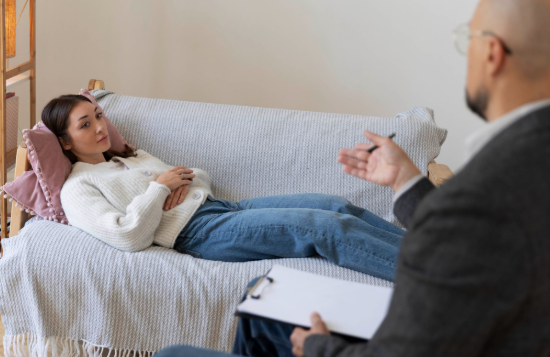
When sleep becomes difficult after trauma, “I am not sleeping well” may describe several different concerns. You might experience nightmares, difficulty falling asleep, repeated awakenings, fear of going to bed, or daytime exhaustion. A useful conversation with your care team separates these experiences instead of assuming they all have the same explanation or require the same treatment.
The U.S. Department of Veterans Affairs (VA) National Center for Post Traumatic Stress Disorder (PTSD) describes both nightmares and insomnia associated with the condition while also discussing other sleep disorders, such as sleep apnea. This guide helps you prepare a sleep-specific account for a healthcare professional. It cannot diagnose trauma-related conditions, insomnia, or sleep apnea, select medication, or provide a sleep treatment schedule.
Say Which Part of Sleep Is Difficult
Begin with the experience that concerns you most. Is it falling asleep, staying asleep, waking earlier than intended, experiencing distressing dreams, or feeling unrefreshed afterward? The VA explains that PTSD can affect sleep in several ways, including feeling on guard, avoiding sleep, or having difficulty settling down after a nightmare.
You do not need to determine which symptom category applies. Describe what happens and how often you notice it, using approximate details when necessary. A healthcare professional can ask additional questions. Avoid treating one difficult night or one dream as proof of a sleep disorder or dismissing a persistent problem simply because you sometimes sleep better.
Nightmares Can Matter Without a Detailed Retelling
If nightmares are a concern, explain whether they wake you, make it difficult to return to sleep, or create dread before bedtime. The VA notes that nightmares can affect sleep and bed partners. Describing their effects can begin the discussion without requiring you to document graphic dream content for an article’s checklist.
You can tell your clinician that discussing details feels difficult and ask how the assessment will proceed. This guide does not prescribe dream rewriting, rehearsal, or another exercise. Questions about professionally delivered nightmare treatments belong in a discussion of their purpose, supporting evidence, possible burdens, and suitability for your circumstances.
Keep Other Sleep Problems in View
The VA explains that sleep apnea is a breathing disorder that disrupts sleep and can occur alongside PTSD. A person may not know that breathing changes are occurring because they happen during sleep; sometimes, another person notices snoring or breathing pauses. Daytime fatigue has many possible causes, so it cannot establish a sleep apnea diagnosis on its own.
Mention any breathing concerns you or someone else has noticed and ask whether further assessment is necessary. Do not ask a partner to conduct a home diagnostic test or rely on an app to rule out a disorder. A healthcare professional may consider a sleep study, but this article cannot determine whether you need one or interpret its findings.
Describe the Effect on the Next Day
The VA notes that poor sleep can affect concentration, memory, reaction time, irritability, and mood. Choose one or two effects that apply to you and explain their practical impact. You might find a familiar task more difficult or feel less able to participate in daily activities. Do not assume that every daytime difficulty is caused by insufficient sleep.
Tell your healthcare professional if exhaustion creates a current safety concern. This guide does not determine driving or occupational fitness or provide universal rules about activities. Describe the actual concern and seek appropriate advice rather than using a checklist to determine whether an activity is safe.
Include What You Already Use or Have Tried
Tell your care team about current medications, over-the-counter products, and substances used around bedtime. The VA discusses how alcohol and other substances may complicate sleep and overall health. Do not change medication or begin using a sleep aid based on this article. Ask the responsible clinician about your concerns and how they relate to your broader care.
Also mention previous sleep or trauma treatment, what you understood it to involve, and any difficulties following it. You do not need to judge whether the treatment was adequate or whether you “failed.” A clear account of what happened provides information for the healthcare professional to consider alongside your current symptoms.
Prepare a Sleep-Concern Summary
Sleep Pattern: Note the main difficulty, approximately when it occurs, and how long you have noticed it. If a clinician has asked you to maintain a sleep diary, follow their guidance. Otherwise, a brief summary is sufficient; you do not need to establish an intensive tracking routine before seeking help.
Nightmares and Nighttime Concerns: Record their effects on sleep and whether discussing the content is difficult. Include any noticeable movements, fear upon waking, or breathing concerns you want assessed. Keep observations reported by another person separate from those you noticed yourself.
Daytime Impact and Existing Care: Include a few effects on daily functioning, relevant health history, and current treatment information you can confirm. Acknowledge uncertainties rather than guessing. The summary is not a diagnostic score or a method for selecting a sleep intervention.
Questions for the Care Team: Ask whether more than one sleep problem should be considered, who can assess these concerns, and what professionally delivered treatment options might involve. The VA distinguishes general sleep habit recommendations from cognitive behavioral therapy for insomnia (CBT-I), a focused treatment approach. This guide does not provide sleep restriction instructions, prescribed bedtimes, or treatment exercises.
Bring the Sleep Problem Into Care
Sleep concerns do not have to remain a vague footnote in a trauma-related conversation. Ask your care team to address the specific pattern and its effects on daily functioning. For suicide or mental health crisis support in the United States, call or text 988; call 911 in a life-threatening emergency, as the National Institute of Mental Health (NIMH) advises. A routine sleep discussion should not delay urgent help.
Sources
Sleep Problems and PTSD – PTSD: National Center for PTSD – https://ptsd.va.gov/understand/related/sleep_problems.asp
Psychotherapies – National Institute of Mental Health (NIMH) – https://www.nimh.nih.gov/health/topics/psychotherapies
Strict reminder from Brain Health USA to seek a doctor’s advice in addition to using this app and before making any medical decisions.
Read our previous blog post here: https://brainhealthusa.com/adhd-household-organization-shared-home/